
How to Choose Premium Engraved Corporate Gifts
Table of Contents
- Start With the Recipient: What Makes a Corporate Gift Feel Premium
- Materials and Methods That Make Engraved Corporate Gifts Last
- Personalised Corporate Gifts: Balancing Branding With Genuine Thought
- Corporate Gift Personalisation Ideas That Recipients Actually Keep
- Corporate Gifting Etiquette: Timing, Budgeting, and Presentation
- Custom Merchandise for Events: Getting the Details Right
- How to Brief Your Engraver and Check Quality Before You Order
- Conclusion: Choosing Engraved Corporate Gifts With Confidence
- Frequently Asked Questions
Last Updated: 14 October 2026
Start With the Recipient: What Makes a Corporate Gift Feel Premium
Most corporate gifting budgets get wasted on the wrong instinct: buying the most expensive item the budget allows. In practice, the gifts people actually keep are the ones that feel chosen for them, not for a purchase order. Learning how to choose premium engraved corporate gifts starts with one question: who is opening this box, and what will they do with it six months from now?
A well-chosen engraved item costing less than a forgotten luxury hamper wins almost every time. That is the throughline of this guide: fit beats price, and personalisation is what creates fit.
Client, Employee, or Event Giveaway?
The recipient type decides almost everything else. A client gift is a relationship gesture, so it should feel considered rather than promotional. An employee gift is recognition, so it works best when it references the person, not just the company. An event giveaway is marketing, so it needs to survive a bag, a journey home and a desk drawer.
Many businesses find that mixing these categories produces gifts that satisfy nobody. Decide which one you are buying for before you look at a single product.
Why Perceived Value Beats Price Every Time
Perceived value comes from weight, finish, usefulness and specificity. A solid metal item with a clean engraving reads as more expensive than a flimsier object that cost more. A gift inscribed with a name or date reads as more thoughtful than a generic logo item at twice the price.
Materials and Methods That Make Engraved Corporate Gifts Last
Material choice is the single biggest predictor of whether an engraved item survives past January. Laser engraving removes or alters the surface of a material, so the result depends entirely on what sits underneath.
Metal is the most durable option. Anodised aluminium and stainless steel hold fine detail for years, which is why we use 0.8mm-thick metal for our Premium Metal Business Cards. Engraving on both sides works well on metal, and the surface resists scratching, so daily handling does not wear the design away.

Hardwoods, leather and slate also engrave beautifully, but each behaves differently. Wood can darken at the engraved line, leather can soften, and slate can chip at fine edges. Glass and crystal look striking but are fragile in transit.
| Material | Durability | Detail Level | Best For |
|---|---|---|---|
| Anodised aluminium | Very high | Fine detail, both sides | Business cards, tags, desk items |
| Stainless steel | Very high | Fine detail | Keyrings, tools, flasks |
| Hardwood | High | Medium detail | Plaques, coasters, boxes |
| Leather | Medium | Bold text and logos | Wallets, notebook covers |
| Glass and crystal | Low in transit | Fine detail | Awards, display pieces |
Personalised Corporate Gifts: Balancing Branding With Genuine Thought
Personalised corporate gifts work when the branding sits beside the personal detail, not on top of it. A logo alone says "marketing". A name, a date or a short message beside a discreet logo says "we thought about you". That balance is what separates a gift from a giveaway.
The practical rule is proportion. On a business card, tag or keyring, the personal element should occupy at least as much visual space as the logo. On larger items such as awards or desk pieces, the logo can sit small and low, with the recipient's name as the focal point.
What to Engrave: Names, Dates, or Just a Logo?
Names and dates almost always outperform a bare logo, because they make the item impossible to regift or discard. A date marks an occasion; a name marks ownership. For client gifts, a name plus a short line such as a project name works well. For employee recognition, a name and start date or milestone year carries real weight.
Logos still matter, but they work best as a quiet signature in a corner. If the item will be used in public, a subtle mark protects the recipient from feeling like a walking advert.
Corporate Gift Personalisation Ideas That Recipients Actually Keep
The gifts that survive are the ones that slot into daily life. Think about what sits on a desk, in a pocket or by a front door, then engrave that.
- Metal business cards for clients who network constantly, engraved with their name and a QR code to their contact details
- Pet ID tags for employees, engraved with the animal's name and a contact number
- Keyrings and bottle openers for event attendees, kept because they are genuinely useful
- Clapperboards and crew gifts for film productions, engraved with the production name and shoot dates
- Desk pieces and awards for milestones, engraved with the recipient's name as the centrepiece
A custom QR code is a detail worth considering for any item a recipient will hand to someone else. It turns a card or tag into a working contact point rather than a keepsake that sits in a drawer.
Corporate Gifting Etiquette: Timing, Budgeting, and Presentation
Corporate gifting etiquette comes down to three things: give at a moment that means something, spend within a range that does not create obligation, and present the gift properly. A well-timed modest gift beats an expensive one that arrives at a random point in the year.
Premium Metal Business Cards →
Timing matters most around a genuine milestone: a project completion, a work anniversary, a holiday, or a thank-you after a difficult job. Budgeting works best per recipient group rather than per item, so you can spend more on long-standing clients and less on a large event run. As a general guide, many teams set a higher per-head figure for client and recognition gifts, and a lower one for event giveaways where volume is the point.
Presentation is the cheapest upgrade available. A plain box, tissue and a handwritten card lift a modest engraved item into something that feels deliberate. Skip the branded packaging if it competes with the gift itself.
Custom Merchandise for Events: Getting the Details Right
Custom merchandise for events has one job: to leave the venue with the attendee and still be useful a month later. That rules out anything fragile, anything that needs explaining, and anything that only makes sense inside the room.
Order quantities are where events go wrong. Teams often order exactly the number of registered attendees and run out when walk-ins arrive, or over-order and store boxes for a year. A common approach is to order for confirmed attendees plus a small buffer, and to keep the buffer items generic enough to reuse at the next event.
Lead times deserve early attention. Engraving is a production step, not a print job, so complex designs and large runs need more notice than a simple logo on a flat surface. If your event date is fixed, brief your engraver before the design is finalised so any material or detail issues surface early.
How to Brief Your Engraver and Check Quality Before You Order
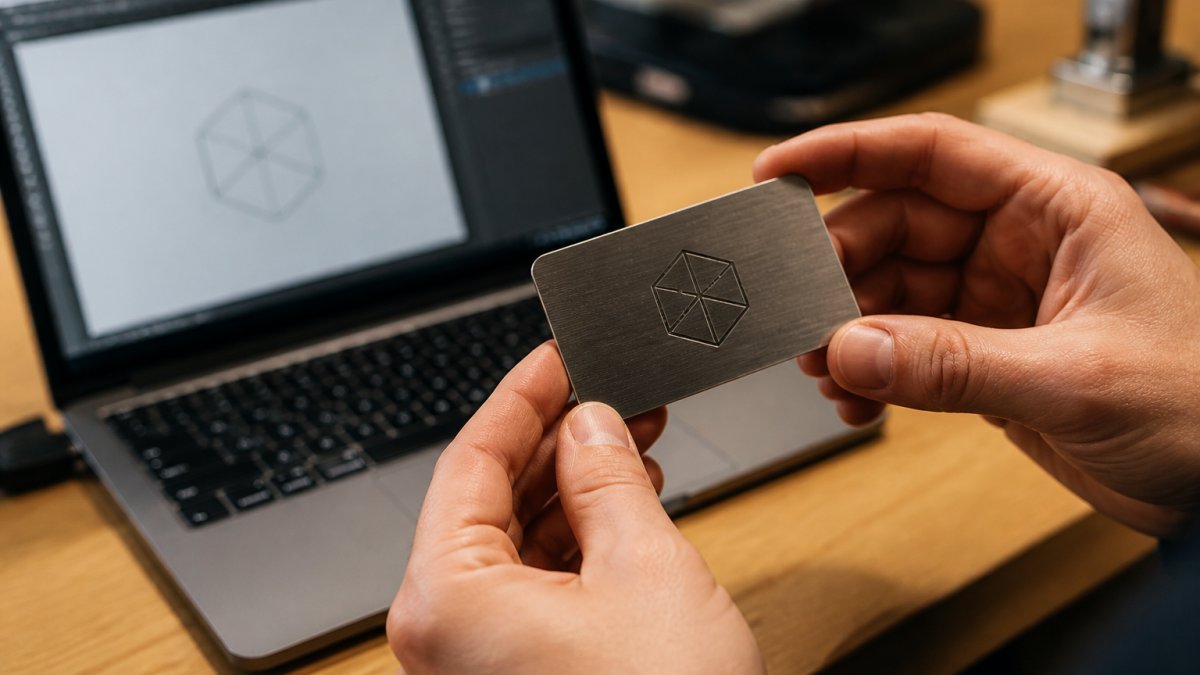
A clear brief prevents almost every quality problem. Vague instructions are the main reason engraved items come back looking wrong, and the fix costs nothing.
Include these details in every brief:
- Exact wording, spelling and capitalisation, checked by a second person
- Preferred font, or a clear note that the engraver should choose
- Layout: where the name, logo and any QR code should sit
- Material and finish, including whether both sides are engraved
- [ ]
- Quantity, deadline and delivery address
- [ ]
Conclusion: Choosing Engraved Corporate Gifts With Confidence
The challenge with corporate gifting is not finding something expensive. It is finding something a client, employee or attendee will still be using next year, and that comes down to fit, material and personalisation rather than budget.
That is the work we do at FOG Creative. We offer bespoke laser engraving on customer-provided items and our own range, including Premium Metal Business Cards that can be engraved on both sides with a custom QR code. Our background in the film industry means we are used to tight deadlines and one-off pieces, and we work from North West London with fast turnaround.
Get started with FOG Creative and turn a gifting budget into items people actually keep.
Frequently Asked Questions
What makes a corporate gift feel premium?
Premium feel comes from three things: material quality, finish, and restraint. A solid metal item with a clean, deep engraving reads as more considered than a larger, lighter object with a printed logo. Weight matters too, because recipients notice it immediately. Personalisation should be subtle enough that the item still looks good in daily use. Even a small run of well-finished engraved corporate gifts will outperform a bulk order of flimsy giveaways in how they are kept and used.
How much should a business spend on corporate gifts?
Set your budget per recipient based on the relationship, not a flat rate. A long-standing client or a departing senior colleague warrants more than a conference attendee. Decide the total spend first, then divide by the number of recipients to find your per-item ceiling. Remember that presentation, packaging, and delivery add to the cost. For personalised corporate gifts, a smaller quantity at a higher quality per item usually creates a stronger impression than spreading the same budget thinly across many low-value items.
Are engraved corporate gifts suitable for both employees and clients?
Yes, but the message should differ. For employees, engraving a name or a milestone date feels like recognition. For clients, a discreet logo or a neutral design works better because they will use the item in front of their own contacts. Avoid over-branding client gifts, as a large logo can make a gift feel like advertising rather than a thank-you. Both groups appreciate items they can actually use, such as metal business cards, provided the engraving is clean and legible.
When should you order engraved corporate gifts?
Allow more time than you think. Bespoke engraving involves artwork checks, a proof, and production, so start at least four to six weeks before you need the items in hand. For custom merchandise for events, add extra time for delivery and any last-minute changes. If your event falls in a busy period, such as December, book earlier. Rush jobs are possible, but they leave less room for correcting a design error, and a misspelled name on 200 items is an expensive mistake.